



Explore
Voice
Video
Music
Online

Discover
Home
Blog
Our Team
About Us

Connect
Contact Us
FaceBook
Twitter

Newsletter
Subscribe

RSS

Social networking during a disaster

As I sat here contemplating this blog, Christchurch experienced its most violent aftershock.

Since Saturday morning’s earthquake, we’ve had over 150 aftershocks – some as strong as magnitude 5.5. Another website puts the aftershocks in the 300s. But it was this morning’s 5.1 that I would say was the scariest. It was sharp and assured – like a house going over judder bars or a dozen heavy trucks – too heavy to be on the road – hitting your building one after another.

It struck at 7.49am, and our flat had not long said goodbye to my brother-in-law who was cycling to work. We told him to ‘be careful out there’. Of course our first reaction, after hovering under a door frame together in a frantic panic, was to call him. Relief came once we finally got through to him but the phoneline got cut just as he said he’d been thrown off his bike on Moorhouse Ave and I could hear in the background someone saying to him ‘are you alright, mate?’  The longest ten minutes of our life came as we tried to get through to him again, and my sister had decided she was going to drive and find him – but her car wouldn’t start. This is where I should explain that my car was totaled in Saturday’s quake by our next door neighbours chimney, so I too had been relying on their car to get around.

My car after Saturday’s quake…

Once we finally established contact with him, and the rest of our family, we immediately turned to Facebook and Twitter to see how everyone else fared. Some had been in the shower at the time, others threatened to leave town if it continues. But what is it about social networking now that makes us instinctively turn there when something happens?

I can only answer from a personal point-of-view in regard to the quake, as I’d rather speak from my perspective than research what academics might say. For me it’s the immediacy of social networking that I like because I can instantly see how everyone else is, where they are and what they were doing at the time; I want to see if anyone or anything has endured more damage; and I want to share my experience with everyone as they do with their other Facebook pals too.

Not longer after the quake on Saturday morning I was called in to cover the natural disaster for Newstalk ZB. It was definitely all hands on deck for such a big event. It was a full on weekend, but a truly humbling experience seeing all the damage around town. It turns out the damage to my car pales hugely in significance to what was out there beyond my home.

Here’s some pictures captured by my flatmate, Danny Knight-Baré, on Saturday:

Twitter was also a flurry of activity after the quake. I of course tweeted about what we’d just experienced, and as we were out exploring the city streets I was called by a Twitter ‘follower’ who works at the radio station Life FM in Auckland to do a live cross from the scene.

During that one, and others later for Newstalk, I experienced several aftershocks as I spoke live on air. Rather scary when you have to keep talking, but it just goes to show that us journos are in fact human after all and feel the same way as everyone else in a natural disaster. My tweeting about the quake also alerted media outlets in the UK, as per a tweet from a former colleague from London:

Because Twitter is an open forum, anyone can send you tweets, so getting messages from people you don’t know internationally in an event like this is truly meaningful:

Disaster Advice for Cantabrians

We’re back to business at Tandem and today we recorded a series of podcasts with Psychologist Jonathan Black, and he recorded one that concentrated on the very topical issue of the psychological effects of the disaster and advice on how to help get back to normal and reassure children, and also what business owners can do to to reconstruct not only their businesses, but their lives.
Jonothan Black’s website is www.farsightglobal.co.nz and he is speaking to Andy Collyer.

Please feel free to re-distribute to other people, other sites or re-blog it.

Audio clip: Adobe Flash Player (version 9 or above) is required to play this audio clip. Download the latest version here. You also need to have JavaScript enabled in your browser.

Christchurch Earthquake

Just a quick note about the 7.1 Magnitude quake felt in Christchurch this morning.

There is extensive damage in the Central City, which is locked down and inaccessible. Tandem has not yet been assessed for damage, but we will be in the office from Monday morning.

All staff are accounted for and well.

I always said that Christchurch Rocks!
http://www.stuff.co.nz/the-press/news/4094979/Huge-earthquake-rocks-Christchurch

Toby Ricketts – Director

Podcasts reaching further

Podcasts are now reaching about half as many people as internet radio does.

Research findings out of the UK has found 31 percent of those surveyed listen to radio via the internet and 16 percent listen to podcasts.

Key Findings of the RAJAR survey:
- 31 percent of adults claim to have ever listened to the radio via the internet, including 29 percent who have listened live (up from 27 percent in November 2009) and 25 percent who have used time-shifted listening (using Listen Again services, up from 23 percent).

- 71 percent of those Listen Again listeners said the service has no impact on the amount of live radio to which they listen; while half said they are now listening to radio programmes to which they did not listen previously. The average user of Listen Again services listened to just under 2 programmes in this way in the previous week.

- Awareness of Personalised Online Radio (POR) increased from 14 percent of Adults 15+ to 17 percent while the number of users of such services has increased from 8 percent to 11 percent. 6 percent claim to use POR at least once a week.

- 15 percent have heard of WiFi radio (a standalone radio set that connects wirelessly to the internet and is able to play any internet radio service) but only 2 percent claimed to own one.

- 15 percent of the adult 15+ population have downloaded a podcast. Almost half (47 percent) of podcast users claim to listen to podcasts at least once a week but only 25 percent of users find the time to listen to all the podcasts they download.

- 74 percent said that listening to podcasts had no impact on their live radio listening habits.

- The typical podcast user subscribes to just under 5 podcasts, and spent about an hour in the last week listening to them. As in previous surveys, comedy and music remain the two favorite genres. -

- 77 percent of podcast users listen to podcasts at home, and 45 percent listen in the car or on public transport.

- Podcasting appears to have a positive effect on radio listening with 36 percent saying that they now listen to radio programs to which they did not listen previously, up from 32 percent in November 2009.

- 13 percent of adults 15+ have ever listened to the radio via mobile phone. Of those, 54 percent select the station using specific FM preset and 14 percent run an app for a specific radio station.

- 20 percent of smartphone owners on the Midas survey (or 1.4 million) have downloaded a radio app and, of those, over half (53 percent) use their radio apps at least once a week.

    Read the full blog from Podcasting News – here.

    Twitter announces security changes

    Twitter has just announced some changes to its security. Here’s what they say in an email to Tweeters worldwide:

    “Over the coming weeks, we will be making two important updates that will impact how you interact with Twitter applications. We are sending this notice to all Twitter users to make sure you are aware of these changes.

    What are applications?

    There are over 250,000 applications built using the Twitter API. To use most applications, you first authorize the application to access your Twitter account, after which you can use it to read and post Tweets, discover new users and more. Applications come in many varieties, including desktop applications like TweetDeck, Seesmic, or EchoFon, websites such as TweetMeme, fflick, or Topsy, or mobile applications such as Twitter for iPhone, Twitter for Blackberry, or Foursquare.

    Update 1: New authorization rules for applications

    Starting August 31, all applications will be required to use “OAuth” to access your Twitter account.

    What’s OAuth?

    * OAuth is a technology that enables applications to access Twitter on your behalf with your approval without asking you directly for your password.
    * Desktop and mobile applications may still ask for your password once, but after that request, they are required to use OAuth in order to access your timeline or allow you to tweet.

    What does this mean for me?

    * Applications are no longer allowed to store your password.
    * If you change your password, the applications will continue to work.
    * Some applications you have been using may require you to reauthorize them or may stop functioning at the time of this change.
    * All applications you have authorized will be listed at http://twitter.com/settings/connections.
    * You can revoke access to any application at any time from the list.

    Update 2: t.co URL wrapping

    In the coming weeks, we will be expanding the roll-out of our link wrapping service t.co, which wraps links in Tweets with a new, simplified link. Wrapped links are displayed in a way that is easier to read, with the actual domain and part of the URL showing, so that you know what you are clicking on. When you click on a wrapped link, your request will pass through the Twitter service to check if the destination site is known to contain malware, and we then will forward you on to the destination URL. All of that should happen in an instant.

    You will start seeing these links on certain accounts that have opted-in to the service; we expect to roll this out to all users by the end of the year. When this happens, all links shared on Twitter.com or third-party apps will be wrapped with a t.co URL.

    What does this mean for me?

    * A really long link such as http://www.amazon.com/Delivering-Happiness-Profits-Passion-Purpose/dp/0446563048 might be wrapped as http://t.co/DRo0trj for display on SMS, but it could be displayed to web or application users as amazon.com/Delivering- or as the whole URL or page title.
    * You will start seeing links in a way that removes the obscurity of shortened links and lets you know where each link will take you.
    * When you click on these links from Twitter.com or a Twitter application, Twitter will log that click. We hope to use this data to provide better and more relevant content to you over time.

    Priority inbox for Gmail

    Gmail has just come up with a good idea to help its customers get through their emails faster – with a priority inbox.

    Gmail says email is great, except when there’s too much of it. Priority Inbox automatically identifies your important email and separates it out from everything else, so you can focus on what really matters.

    When you click the Priority Inbox navigation link on the left-hand side of your mail, you’ll see messages grouped in three sections: Important and unread, Starred, and Everything else. This is the default setup, but you may customise your sections on the Priority Inbox in Settings.

    If Priority Inbox mistakes an email as important or doesn’t flag one that’s important to you, you can teach it to make better selections. Just select the message in question, and click the “mark as important” or “mark as not important” button; they’re the buttons with plus and minus icons just to the left of the Move to and Labels drop-down menus.

    When you mark a message as not important, it will move out of the Important section. Over time Priority Inbox will learn what’s important to you and incorporate the feedback you give via these buttons.

    The signals that Gmail uses to prioritize your email are never surfaced to other users — they’re only used to prioritize your mail for you. So if you always ignore email from Bob and those messages are marked as “not important” in your inbox, it won’t affect how Bob sees the conversation in his inbox.

    Here’s a quick video from Gmail all about its new rollout:

    ‘iPods making Kiwis more efficient’

    iPods are apparently making Kiwis more efficient at work.

    A new SEEK Watercooler survey shows over half of Kiwi workers find listening to an iPod helps make them more productive at work, with 56 percent plugging in to focus on a task.

    Comments on the poll ranged from how listening to music can help you focus on a task by “Blocking out noise and distractions in the office,” to the view that “It can be a detriment to your work, with people missing out on what’s going on around them.”

    With over 300 million iPods sold worldwide since their launch in 2001, personal audio devices and their popularity are firmly entrenched in our social fabric. As new participants start in the workforce who have always used headphones as a tool for focusing, workplaces will have to adapt to their presence.

    Research conducted by the NZ Radio Bureau has found music in the work place is relatively common. Seen as a way to boost mood and create atmosphere, 30 percent of work places have a radio playing and the shared experience can help bring people together.

    The Seek Watercooler poll asked:
    Does iPod use at work increase productivity?
    Yes: 56 percent
    No: 44 percent

    Total votes: 506

    Tandem helps Taupo council stream LIVE

    Taupo District Council made national news last month when it became the first in the country to stream its monthly meetings live over the internet.

    This month, Tandem has hopped on board to smooth out technical issues that arose from that webcast, and we have our techie man Sean Davies on site to make sure today’s meeting runs without a hitch.

    The council decided to undertake these webcasts as part of their new initiative to provide greater access to the council decision-making process and promote openness and transparency.

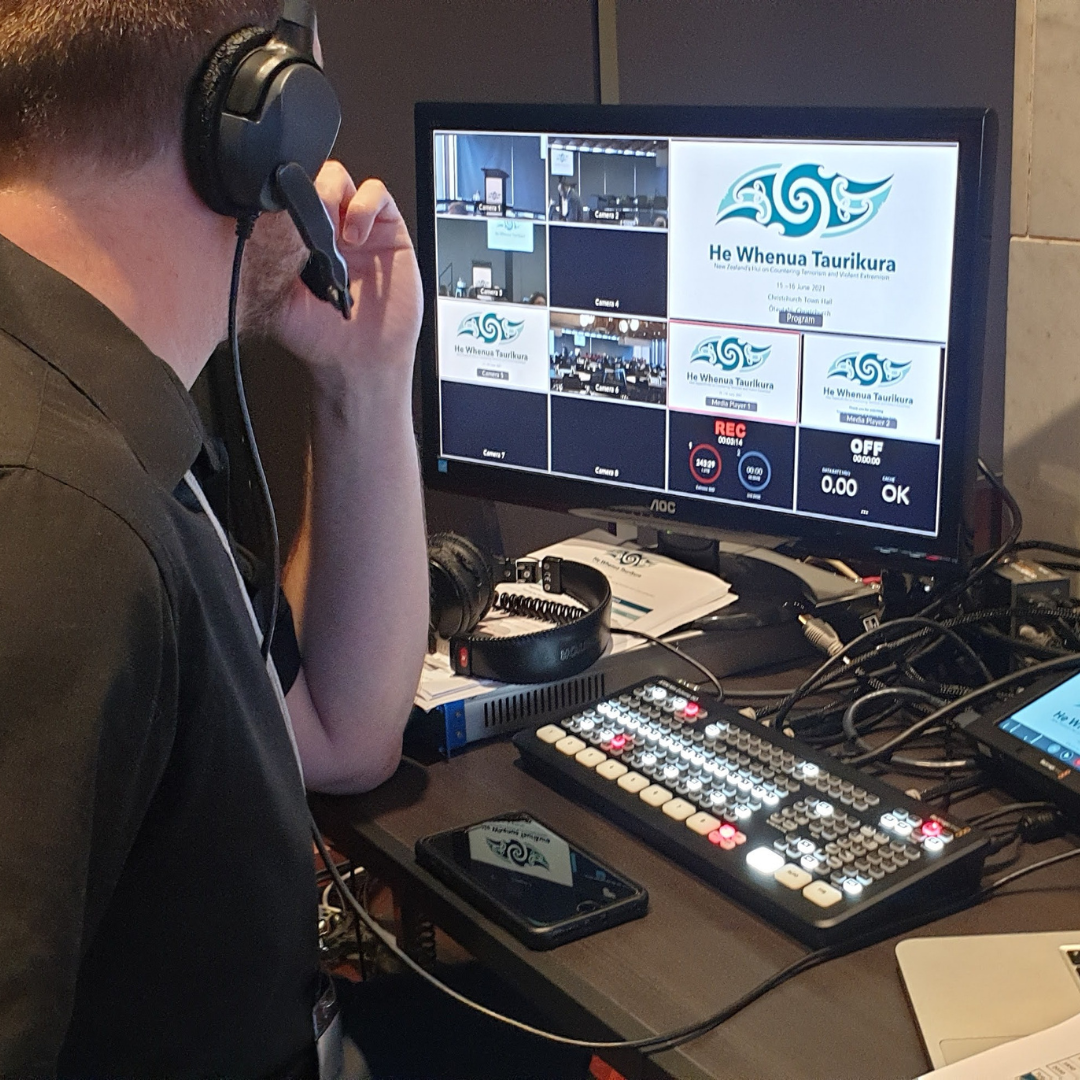
    A key feature of the Tandem solution is the recording of the webstream, and editing that video into bite-sized, searchable segments that can be found and shared through the LaBon Live website Tandem has built.  The site includes blogs, social media features, and all the videos can be archived and will become a great resource for the community in the district. This is the same kind of solution Tandem took to Parliament last year where inthehouse.co.nz was established.

    Even before the council trial began at last month’s meeting, they had a great deal of interest from other councils all around the country with many of them contacting the mayor for more information.

    Here’s a link to Taupo District Council’s site about today’s meeting and today’s agenda.

    Who will be the 2010 RounDUp renegades?

    Wanted: Canterbury’s next biggest musical vigilantes, a new brand of outlaw who shred from the hip; who will be the 2010 RounDUp renegades? This showdown is open to all brave enough to face their fears and join the ranks of past RounDUp outlaws – including The Klap, The Tiger Tones, Bang! Bang! Eche!, Slipstream and The Undercurrents, Shapeshifter, The O’Lovelies, The Deceivers, The Insurgents, Heavy Jones Trio, P Bass Expressway and 2009 overall winner; Sleepy Age.

    The Christchurch live music scene is thriving, with over 500 bands currently listed on the CHART website. The Dux de Lux RounDUp 2010 is a tangible example of RDU’s commitment to developing locally produced, original music and sharing it with the wider New Zealand music industry. RDU 98.5FM is stoked to be collaborating with Christchurch’s key music industry partners to provide the winning band with the opportunity to get their career as a band rolling.

    Bands that reach the final will automatically receive:
    - A mastered live recording of their performance with us at Tandem Studios and MAINZ, and vouchers thanks to Real Groovy
    - The grand final winner will receive $1500 credit thanks to the Rockshop, a live mastered recording of their performance from us at Tandem and MAINZ, a studio recording thanks to The Sitting Room, a music video from this recording produced thanks to Gorilla Pictures, a promo photo session with Dean Mackenzie photography, management membership and mentoring thanks to Music Managers Forum, a live to air over the b.net from Auckland’s Red Bull studios and finally promotional support and mentoring thanks to CHART!

    Further announcements to follow – all details will be posted on www.rdu.org.nz

    Entry forms must be received by 6th September.

    For more information, contact RDU on (03) 364 2983 or email: roundup@rdu.org.nz

    Tandem’s studio gets makeover

    We’ve started some renovations to our studio to not only give a better quality of sound to our recordings but to give a better flow to our building.

    As it’s set up at the moment, when the recording studio is in use we can’t access the facilities as they’re in the same area as the recording studio and the area where the producer and client sits. So, the solution was to bump the voice booth into the main studio and move the engineer into the now-vacant voice booth.

    So, the old studio will soon be a meeting and social room – with excellent access to the kitchen and bathroom – an excellent solution!

    Our sound engineer, Toby Ricketts, says using the bigger studio as a voicebooth will be more acoustically controlled. He says the multi-purpose space will give better sound and expects an improvement in voice-over recording quality.

    Here’s what the renovations look like today:

  • Tags

  • Case Studies

    • Social media for your business

      Social media is more than having a Facebook, LinkedIn or MSN account; it’s more than uploading a clip onto YouTube; [...]

    • Case Study: ANZCA ASM

      Last week, we covered the ANZCA ASM (Australian and New Zealand College of Anaesthetists Annual Scientific Meeting) at the Christchurch [...]

    • Tandem in the news

      Tandem has been featured in the latest idealog magazine The article asks; Content is king – but who’s telling your [...]

    • Case Study: Richard Dawkins podcast

      Tandem Studios was proud to collaborate with the Christchurch Press recently to bring you Richard Dawkins’ lecture held recently at [...]

    • Case Study: rebranding successfully

      When Wood River Hawes rebranded themselves to become E3 Accountants, they approached it in a simple manner: they asked their [...]

    • Case Study: inthehouse.co.nz

      The Office of the Clerk has to inform and keep the public up-to-date with what is happening in the House, [...]

  • Recent Posts